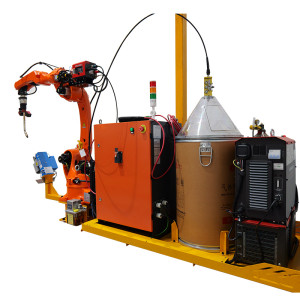
YOMI YM-ZZHJ-R-BC-12 Steel Structure Welding Robot
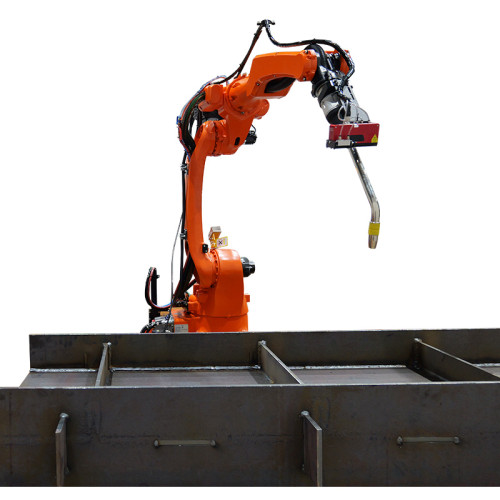
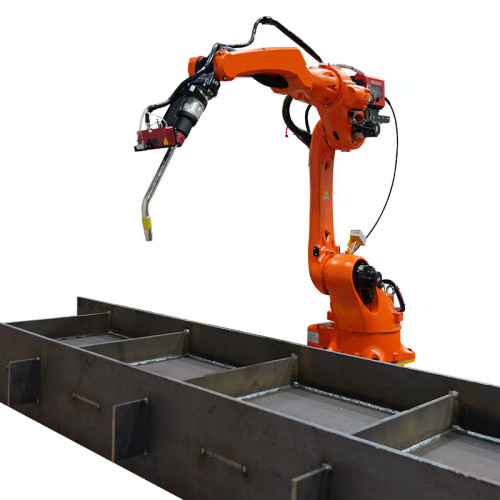
In short: the YOMI YM-ZZHJ-R-BC-12 is a teaching-free robotic welding workstation for structural steel. It runs on a 10 m ground rail, imports the fabrication model (STEP or IFC) or a drawing, scans the workpiece with a line-laser vision sensor and a 3D camera, and extracts every weld seam automatically in about three minutes. It then welds carbon-steel members from 6 to 18 mm thick in flat or vertical position, with 6 to 7 mm penetration and automatic corner wrapping. Maximum workpiece is 10 m x 1.2 m x 0.5 m, and no teach-pendant programming is required.
What the robot does
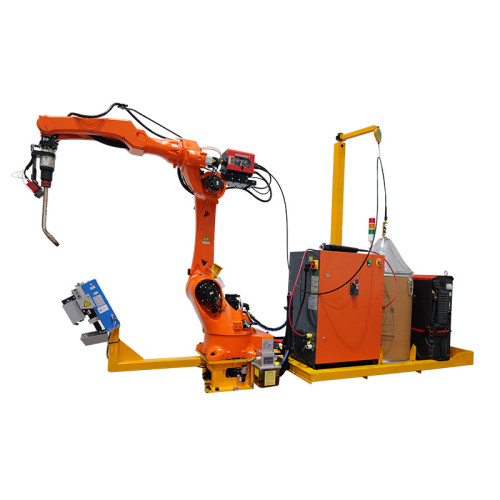
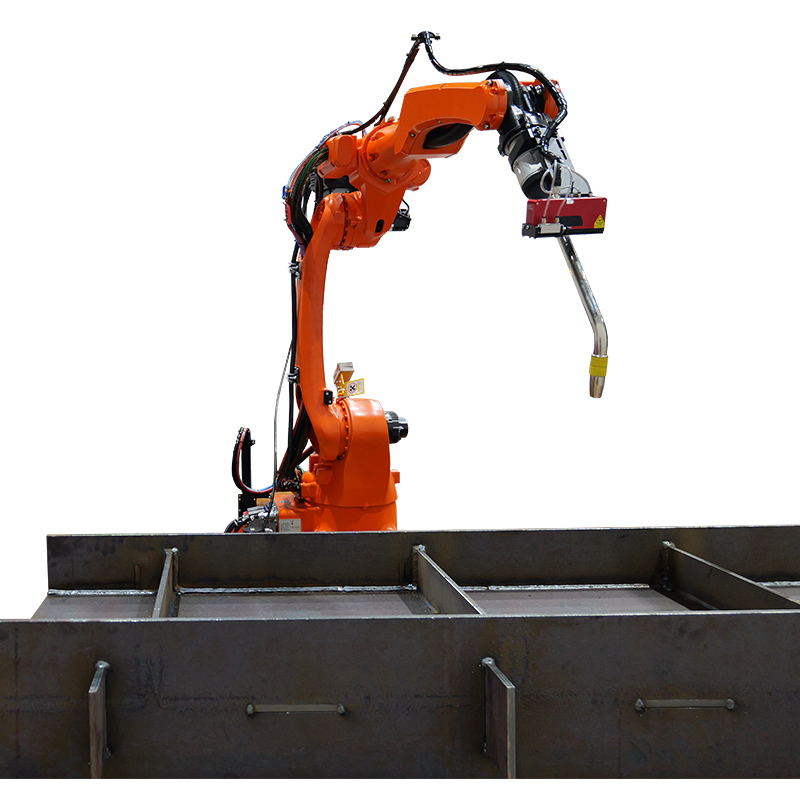
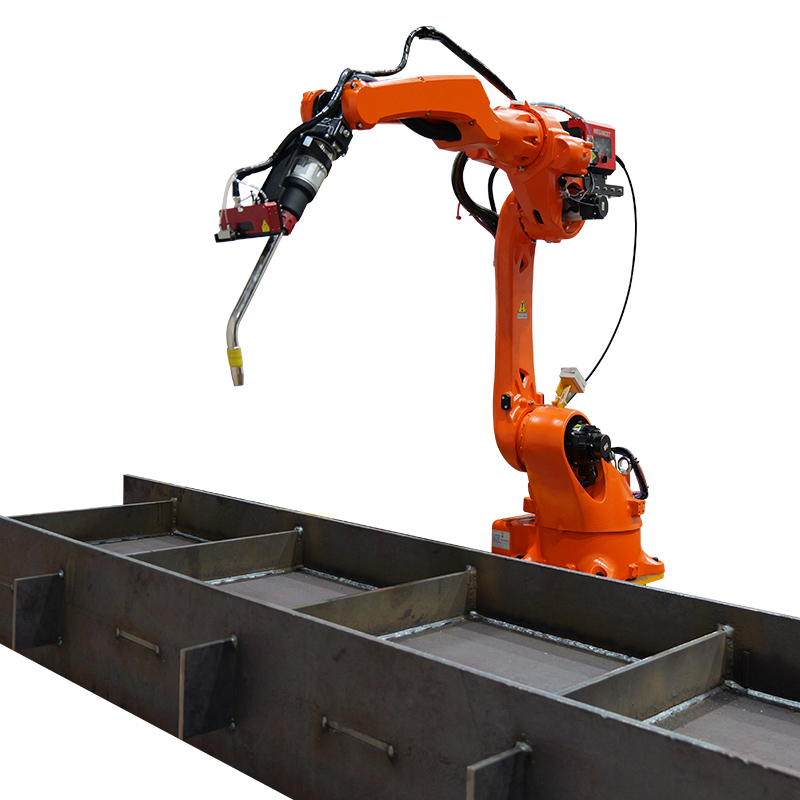
The workstation is a rail-mounted industrial robot arm combined with a scan-based seam recognition system. Instead of teaching point by point with a teach pendant, the operator imports the digital model of the part, lets the 3D camera scan the workpiece, and the system generates the welding path itself. The robot then runs the full cycle unattended: return to zero, transition, seam finding, welding, counting and torch cleaning.
- Teaching-free programming, so no teach pendant and no robot programmer
- BIM model driven welding from STEP or IFC files
- Weld seams extracted automatically, no weld marking in the design stage
- Line laser vision for flat welds, wire seam finding and arc tracking for vertical welds
Key Specifications at a Glance
| Model | YM-ZZHJ-R-BC-12 |
|---|
| Configuration | Floor-mounted rail-guided robotic welding workstation |
|---|
| Effective welding range | 10 m (length) x 1.2 m (width) x 0.5 m (height) |
|---|
| Robot arm length | 2 m |
|---|
| Ground rail | 5.9 m x 2 sections, effective welding length 10 m |
|---|
| Vision sensor | Line laser vision sensor with 3D camera scanning |
|---|
| Welding mode | BIM model driven welding (STEP, IFC format) |
|---|
| Welding plate thickness | 6 to 18 mm |
|---|
| Weld penetration | 6 to 7 mm |
|---|
| Welding positions | Flat welding and vertical welding, with automatic corner wrapping |
|---|
| Applicable material | Carbon steel |
|---|
| Floor space | 12 m x 0.85 m |
|---|
How Teaching-Free Robotic Welding Works
The operator does not program the robot point by point. A model is imported, the workpiece is scanned, and the system derives the weld seams from the scan. A full scan takes about three minutes, and the same program can be reused for every identical part.
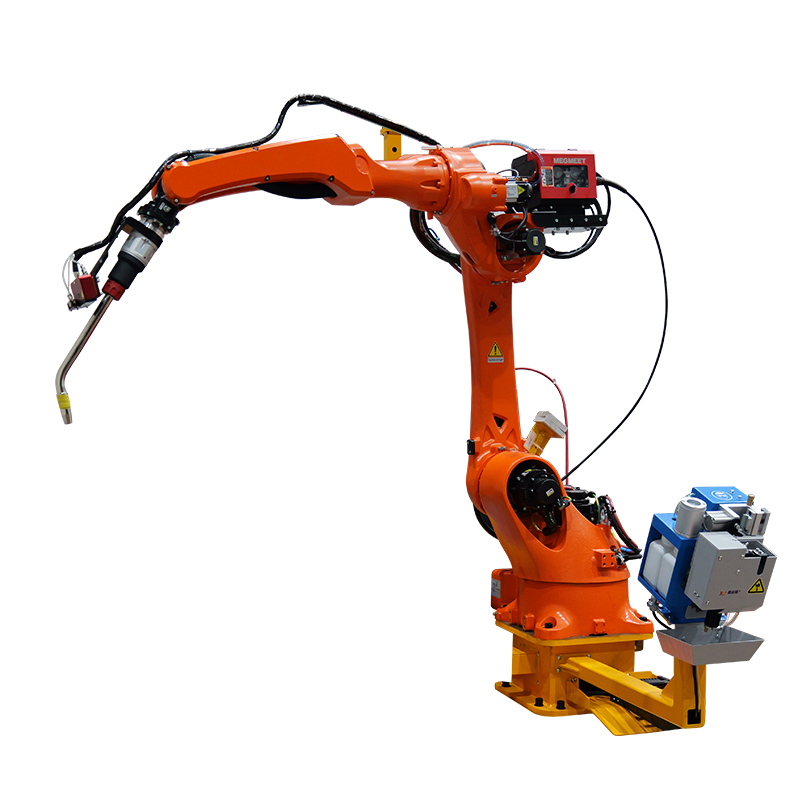
1. Import the model
The fabrication model is imported as a BIM file in STEP or IFC format, or from a workshop drawing. The system prepares the welding task without any teaching.
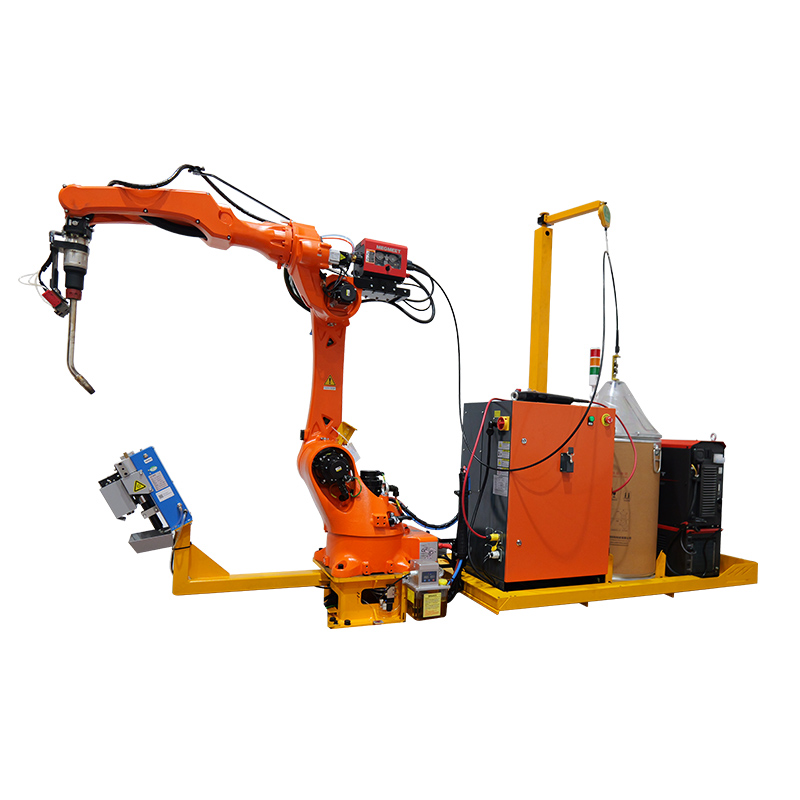
2. 3D scan and seam extraction
The 3D camera scans the workpiece in two passes, about three minutes in total. The software identifies and extracts all weld seams automatically, with no need to mark welds in the design stage.
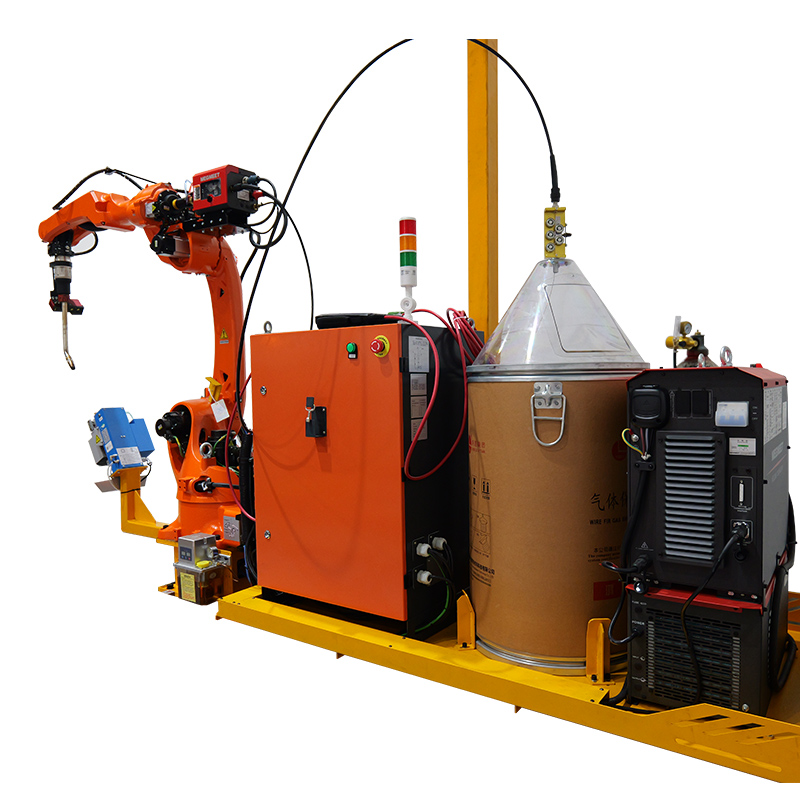
3. Automatic welding
Laser seam finding is used for flat welds; wire seam finding and arc tracking take over for vertical welds. An arc sensor monitors the process throughout, and collision detection protects the torch.
4. Full automatic cycle
One robot program covers return to zero, transition, seam finding, welding, counting and torch cleaning, so operator intervention is kept to a minimum and the work cycle is repeatable.
Core Advantages
Teaching-free operation
No teach pendant and no robot programming specialist. The machine derives its path from the model and the scan, which removes the biggest bottleneck in robotic welding for high-mix steel fabrication.
BIM model driven
The workstation reads the digital model directly in STEP or IFC format, so the welding data comes from the same model the fabricator already designs in.
Seams found automatically
A line laser vision sensor and a 3D camera scan the part and extract the welding seams, so welds do not have to be marked or annotated during design.
Stable weld quality
Arc sensing with arc tracking, laser seam finding for flat welding and wire seam finding for vertical welding hold the torch on the joint and keep penetration consistent at 6 to 7 mm.
Learn it in half a day
The operating software is deliberately simple: an operator with no programming background can run the station after about half a day of training, which reduces dependence on scarce skilled welders.
Flat and vertical welding
Both flat and vertical seams are welded automatically, including automatic corner wrapping, with anti-collision protection throughout the cycle.
Workstation Configuration
What is included in the standard station
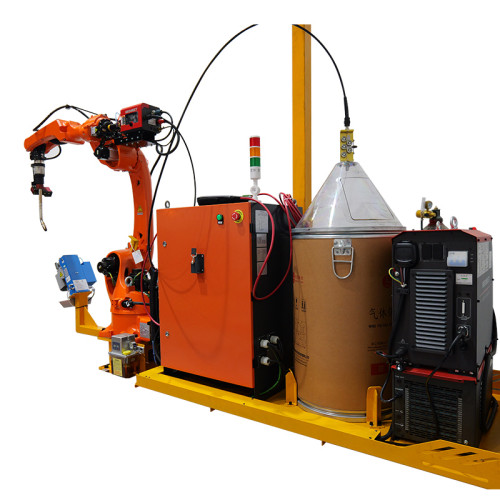
- Industrial robot body on a floor-mounted ground rail
- 3D camera for scan-based seam extraction
- Welding power source with arc sensor
- Water-cooled welding torch with wire feeder
- Ground rail 5.9 m x 2 sections, effective welding length 10 m
- Cooling water tank and control cabinet
- PC operation console running the YOMI welding software
- Torch cleaning unit and accessory bracket
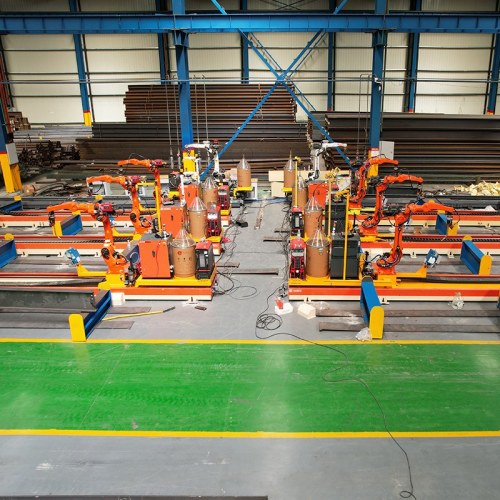
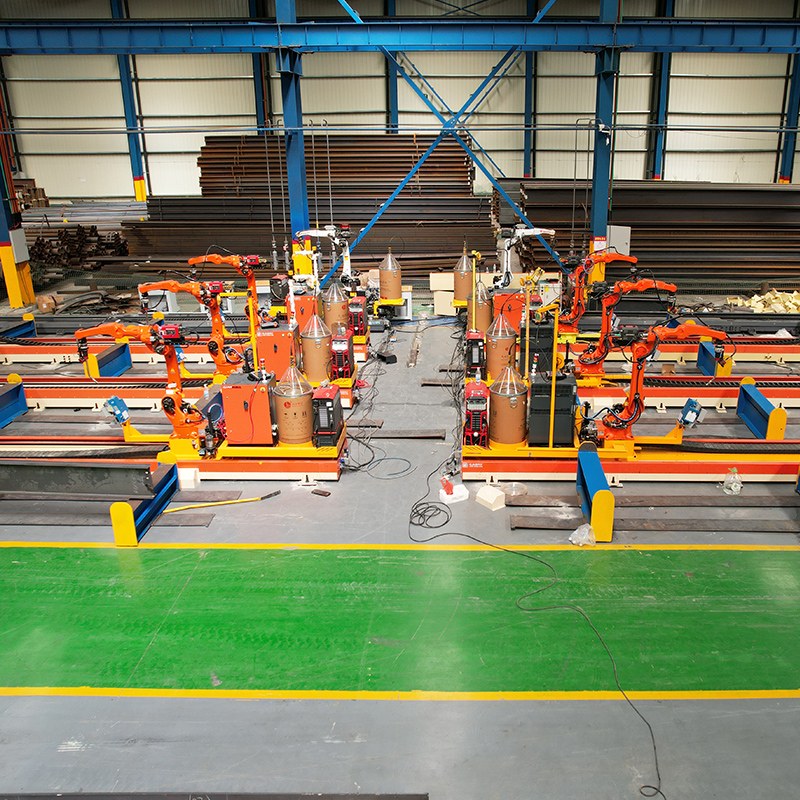
The station footprint is about 12 m by 0.85 m, so it can be dropped into an existing fabrication bay or integrated into a larger H-beam production line.
Welding Capability and Limits
| Item | Value |
|---|
| Welding material | Carbon steel (stainless steel, copper and aluminium are not supported) |
| Plate thickness | 6 to 18 mm |
| Weld penetration | 6 to 7 mm |
| Maximum workpiece size | 10 m (length) x 1.2 m (width) x 0.5 m (height) |
| Minimum spacing between side plates | 200 mm |
| Minimum distance from workpiece end | 60 mm |
| Welding positions | Flat and vertical, with automatic corner wrapping |
| Seam finding | Laser seam finding for flat welds; wire seam finding with arc tracking for vertical welds |
| Scan and program time | About 3 minutes for a two-pass 3D scan and automatic seam extraction |
Typical Applications
The station is designed for repetitive structural-steel welded assemblies, where the same part family is produced again and again:
- Crane beams and crane runway girders
- H-beam main weld seams and H-steel sandwich plates
- Platform beams and roof beams
- Steel structure reinforcement plates and stiffeners
- Purlin support beams and bracket welding
- Bridge partitions and other long-seam components
Typical users are steel structure fabricators, bridge builders and heavy equipment manufacturers that run repeatable welded parts and want to remove the dependency on skilled manual welders.
Robotic Welding vs Manual Welding
| Item | Manual welding | Teach-pendant robot | YOMI YM-ZZHJ-R-BC-12 |
|---|
| Programming effort | None, but relies on a skilled welder | Point-by-point teaching per part | Teaching-free, driven by the imported model |
| Weld consistency | Depends on the individual welder | Good, but path errors are repeated | Arc tracking and laser seam finding keep the torch on the joint |
| Changeover to a new part | Immediate, quality varies | Slow re-teaching | Import the model and re-scan |
| Skill requirement | Years of welding experience | Robot programmer required | About half a day of software training |
| Weld marking | Measuring and marking on the part | Usually required in design | Seams extracted from the 3D scan |
Manufacturer, Delivery and Service
Who builds it
Shandong YOMI Intelligent Science and Technology Co., Ltd. operates an 11,000 square metre facility with 200+ staff, two factories and nine workshops, and exports steel structure equipment to 120+ countries with 16+ years of experience.
Quality system
Produced under ISO 9001 quality management, with incoming inspection and a trial run on the customer's part family before shipment.
Delivery
Export seaworthy packing with moisture and rust protection for long-distance shipping. The robot cell is pre-assembled and tested before dispatch, and lead time is confirmed with the order.
Service
Machine warranty with remote and on-site technical support, welding parameter guidance for your part family, and operator training.
Frequently Asked Questions
What is the YM-ZZHJ-R-BC-12 welding robot used for?
It is a teaching-free robotic welding station for structural steel parts such as crane beams, H-beam main seams, platform beams, roof beams, reinforcement plates, purlin support beams and bridge partitions.
Does it need a robot programmer or a teach pendant?
No. The station is teaching-free: the fabrication model is imported in STEP or IFC format, the workpiece is scanned, and the weld seams are extracted automatically. The software is simple enough to learn in about half a day.
What materials and thicknesses can it weld?
Carbon steel from 6 to 18 mm thick, with weld penetration of 6 to 7 mm. Stainless steel, copper and aluminium are not supported.
What is the maximum workpiece size?
10 m long, 1.2 m wide and 0.5 m high. The robot arm is 2 m, the ground rail is 5.9 m x 2 sections with a 10 m effective welding length, the minimum spacing between side plates is 200 mm and the minimum distance from the workpiece end is 60 mm.
How are the weld seams found?
A line laser vision sensor and a 3D camera scan the workpiece in two passes, about three minutes in total, and the software extracts the seams automatically. Flat welds use laser seam finding; vertical welds use wire seam finding together with an arc sensor.
Can it weld vertical seams and corners?
Yes. The station welds both flat and vertical seams, and performs automatic corner wrapping, with collision detection active throughout the cycle.
Can YOMI integrate the robot into a production line?
Yes. YOMI builds cutting, assembling, welding, straightening, drilling and painting equipment and can integrate this welding station into a larger steel structure or H-beam production line.
Get a Welding Robot Configuration and Quotation
Send us your part family, plate thickness, weld length and target output. Our engineers will confirm whether teaching-free robotic welding fits your parts and return a configuration with a quotation.
Contact YOMI Engineering